
INTRODUCTION:
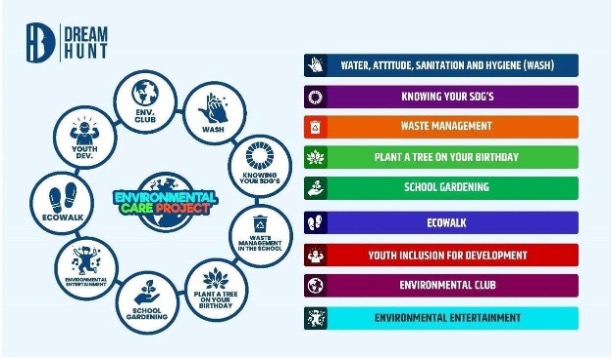
In February, 2024, Dream Hunt (DH) began engaging Ebenezer Senior High School (SHS) and had the opportunity to meet the students every Wednesday afternoon. The project was in three phases, the 1st phase entailed education on WASH, Waste Management, Knowing Your SDG’s and Environmental Walk (ECOWALK). The 2nd phase entailed school gardening (plant a tree on your Birthday campaign), Environmental club and Environmental entertainment. The climax was on the Youth Inclusion for development. This project helped the students to learn about their environment and be able to practice in their homes and community to create positive and lasting solutions. It also helped students to be environmentally conscious, build sustainable practices and global responsibility as well as generational values and work towards a sustainable future.
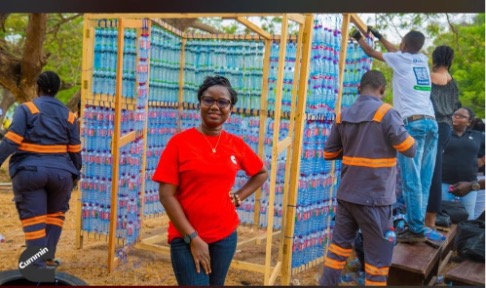
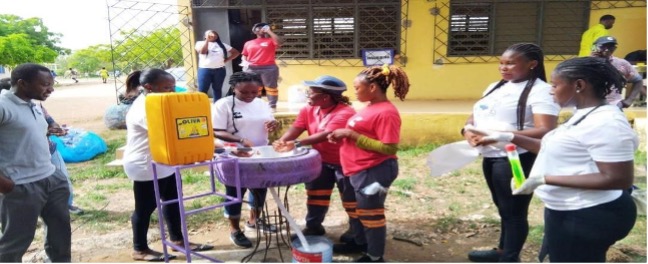
We had the opportunity to engage with the Cummins Ghana staff via online on the environment and the celebration of the World Water Day. Cummins Ghana staff supported massively in building the plastic house (where plastic waste is stored for later delivery to recycling companies at a fee), hand washing stand and participated in the Environmental Walk (ECOWALK). This was an extraordinary commitment by the Cummins Ghana staff’s Corporate Responsibility in protecting the environment.
Fig 1: Illustration of Key Components of Environmental Care Project
We had the opportunity to engage with the Cummins Ghana staff via online on the environment and the celebration of the World Water Day. Cummins Ghana staff supported massively in building the plastic house (where plastic waste is stored for later delivery to recycling companies at a fee), hand washing stand and participated in the Environmental Walk (ECOWALK). This was an extraordinary commitment by the Cummins Ghana staff’s Corporate Responsibility in protecting the environment.
Fig 2: Cummins staff actively engaged in building the plastic house.
PROJECT DESCRIPTION:
The Dream Hunt Environmental Care Project is focused on empowering youth to become proactive environmental advocates while helping them pursue their aspirations through inclusivity and fairness. The organization’s mission entails engaging young individuals in environmental conservation efforts, providing them with practical knowledge and skills to address climate change and promote sustainability. Dream Hunt’s initiative is the cultivation of environmental stewardship among young people while aiding them in their career paths. The organization adopts an integrated, holistic approach to environmental education and advocacy, merging practical initiatives with career development. Through hands-on projects, Dream Hunt aims to instill a culture of environmental responsibility that enables youths to tackle local and global environmental challenges effectively.
Water, Sanitation and Hygiene (WASH) and Waste Management:
Students have the right to quality education, which includes access to drinking water, sanitation and hygiene (WASH) because they spend a significant portion of their day in school. This can impact student learning, health, and dignity, particularly for girls. The inclusion of WASH in our campaign helped in addressing the Sustainable Development Goals 4(Quality Education) and Goal 6 (Clean Water and Sanitation). Our team trained the students on WASH and waste management methods as well as how they can reduce plastic waste pollution and encourage the plastic waste picking initiative as punishment to replace caning in our schools. Our campaign encouraged students to develop a positive attitude towards community involvement in WASH initiatives. This has increased their participation in clean-up drives, advocating for better sanitation facilities in their schools and homes by promoting hygiene awareness campaigns. As part of our training, we emphasized on the importance of individual attitudes towards water conservation, waste reduction, and personal hygiene and how personal habits impact the environment and health. This also builds their capacity on the importance of personal cleanliness, including regular hand washing techniques using soap and water, especially before eating and after using the bathroom by highlighting the importance in preventing the spread of diseases.
Fig 3: Donated Plastic bins, buckets, big water storage containers for their wash rooms.
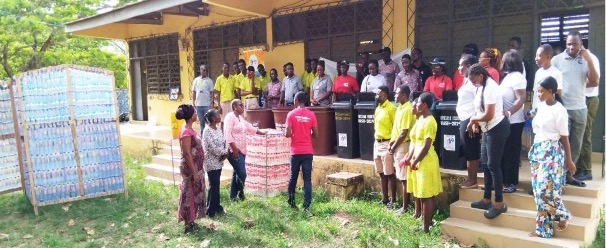
We educated the students on how they can separate their organic, residual and domestic hazardous waste before it is taken to the landfill. Students have cultivated the habit of waste segregation even in their homes. The most significant impact was the practical sections where students were able to create waste bins with single used plastic bottles and plastic houses where plastic waste can be kept before it is sold out to the recycling companies (the funds raised is to be used to support the environmental activities in the school). The students also had a clear understanding to also package their single used plastics for the plastic houses built in their school instead of disposing it improperly where they could end up choking open waterways and causing floods when we experience heavy downpours due to extreme weather conditions caused by climate change. The school administration is now committed to gather the single used plastics even from their homes to the school to serve as a motivation to the students. The environmental club members had been taken through upcycling training where they upcycled the single used plastics waste as well as the textile waste to create beautiful artifacts. They exhibited their work and were willing to take it beyond their school community.
Fig 4: Recycled hand washing stand etc.
Students were trained on the 17 Sustainable Development Goals (SDG’s) as well as the structures around the five pillars of the 2030 Agenda (People, Planet, Prosperity, Peace, and Partnerships). Our team used the SDG visuals, infographics, and interactive discussions to help students grasp the importance of each goal and understand how their individual and collective actions can contribute to achieving these global objectives. This educational approach ensured that students were not only aware of the SDGs but were also equipped to implement actions that directly support these goals. As students implement the principles of sustainable development in their communities, they will serve as catalysts for change as well as advocate for a sustainable, equitable, and prosperous future in alignment with the 2030 Agenda.
Environmental Walk (ECOWALK): https://redmedia37.pixieset.com/ecowalk/
Dream Hunt (DH) has successfully empowered students to become environmental advocates by encouraging them to take active responsibility for their communities, particularly through the ECOWALK initiative. This activity was designed to foster a deeper sense of environmental responsibility and raise awareness of critical issues such as plastic waste and pollution, which contribute to climate change. The ECOWALK initiative was a follow up to the WASH initiative where we engaged students in a hands-on learning experience focused on environmental conservation, waste management, and community education. The walk involved the collection of plastic waste from households near Ebenezer Senior High School (SHS) and the surrounding Dansoman community. In addition to waste collection, the initiative included educational outreach to local residents, emphasizing the importance of waste segregation and the long-term benefits of recycling. Using the 5 R’s approach (Refuse, Reduce, Reuse, Repurpose, Recycle), students educated their neighbors about the value of reusing plastic materials and how these actions contribute to mitigating environmental degradation. The ECOWALK was strategically conducted along selected routes in Dansoman, a central area in the heart of the Ablekuma West District, enabling students to engage directly with the local community. The walk not only served as an advocacy tool but also promoted physical well-being, encouraging students to integrate healthy, active lifestyles with environmental responsibility.
Through this initiative, Dream Hunt has fostered a strong sense of community engagement among students, providing them with the tools and knowledge to be effective advocates for environmental sustainability. The project highlighted the importance of collective action in addressing urgent environmental challenges while empowering students to be leaders in the movement for a cleaner, more sustainable future.
As part of the ECOWALK preparation our team made sure of the below:
- Security (police) Escort – The Ghana Police of the Dansoman Municipality was informed and contracted to provide security through the selected routes of the walk. They helped maintain safety, law and order before, during and after the walk.
- Printing of advocacy materials – this included banners, branded T- Shirts and placards bearing messages on plastic waste, dangers of plastic waste, single use of plastics and other topical environmental issues. These visual aids helped to promote awareness as well as communicate our messages.
- Hiring of transportable PA System (public announcement van) – This was an additional advocacy tool in audio form to help communicate our messages effectively, by reaching all and sundry. During the walk, community members were informed of the rationale of the exercise and participants chanted songs on climate justice, climate change, effects of plastic pollution, effort to reduce plastic waste (5 R’s – Refuse, Reduce, Reuse, Repurpose and Recycle). These were all done in English and the local dialect (Twi and Ga), some messages on the placards were translated in the local dialect.
- Sack Bag and hand gloves – In addition to creating awareness, participants were involved in the collection of empty plastics (bottles and sachets) in the communities hence, the sacks and hand gloves. The collected plastics were sent to the school to compliment efforts of the plastic house, a repository of empty plastic bottles. The plastic house serves as a potential for upcycling (i.e. using empty plastic bottles to construct a plastic house), economic value (i.e. trading collected plastics for money) and a cleaner environment.
- Media coverage – For documentation and visibility of the activity on our social media platforms, a videographer (camera and drone expert) was contracted.
- Refreshment – During the exercise, participants were refreshed with water and snacks were made available after.
School Gardening:
https://drive.google.com/drive/folders/1-t1uex4tnbmIt5QVINeAnynepytcApJq?usp=drive_ link
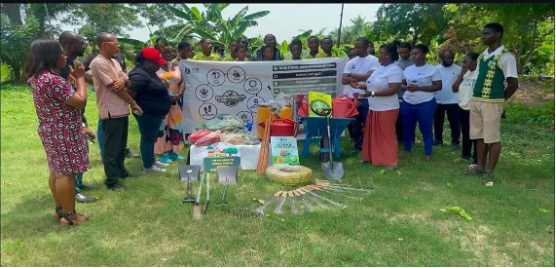
The school gardening activities helped students to learn about sustainable agricultural practices, organic farming, and the importance of local food production. The project involved the preparation of the land, procurement of seedlings, and planting. It also involved purchasing tools to enhance students participation and maintenance activities such as watering, weeding, pruning and planting of the vegetables. Students’ involvement in the project provides an opportunity for them to learn practical skills and develop an appreciation for the environment. An environmental club was also set up in the school where students are very dedicated. The garden also served as a living classroom where students could directly engage with environmental conservation, promote biodiversity, and understand the importance of sustainable land management. School gardening aligns with SDG 15 (Life on Land) and SDG 2 (Zero Hunger), fostering both ecological sustainability and food security. The administration also engaged all the students in form 2 and form 1 according to their subjects and they were very committed to the plot of land that was allocated to their class, including teachers who were responsible for each group. Through practical initiatives such as school gardening and planting trees, students developed a deeper connection to their environment and gained a sense of responsibility for the planet’s future.
Fig 5: Donated School Gardening tools(Cutlass, Watering Cans, Knapsack container etc
Plant a Tree on Your Birthday:
As part of the campaign, students were encouraged to plant a tree on their birthday as a personal commitment to environmental stewardship. This initiative provided a meaningful way for students to contribute to SDG 13 (Climate Action) and SDG 15 (Life on Land) by directly engaging in activities that combat climate change and contribute to ecosystem restoration and fight against reducing the carbon footprint in Ghana.
The Environmental Club
The Environmental Club engaged over 150 committed students from all levels with executives who were actively involved in the activities of the environmental care activities. Students were given the opportunity to be environmental ambassadors with committed teachers who were responsible for coordinating the club activities. The club members had the opportunity to be trained. The members organised environmental entertainment and showcased most of the things they have learnt. The environmental club ensures sustainability of our projects and creates a platform led by students to actively engage in environmental related initiatives thereby promoting critical innovation and leadership among students while improving the school’s environment. Our campaign-encouraged students to take action against climate change through initiatives such as ‘School Gardening’ and the ‘Plant a Tree on Your Birthday’ campaign. These activities not only contribute to carbon sequestration but also promote environmental stewardship among students, reinforcing their role in climate action and environmental conservation.
Youth Inclusion for Development and Environmental Club: https://lumavision2252.pixieset.com/liveinworship-praisechoir/
Youth Inclusion for Development was the climax of our project at Ebenezer SHS where we provided a picture exhibition of the school gardening activities while the Environmental club members showcased their artworks made from recycled waste materials, demonstrating creativity and environmental consciousness as well as sending a message about environmental sustainability. Through the event, we were able to engage with important figures, including representatives from Cummins Ghana, who expressed a desire to host an exhibition in their office premises to provide a broader stage for our advocacy efforts. This opportunity to exhibit the students’ work within a corporate space not only raised awareness but also opened the door for further advocacy and collaboration in the future. Additionally, the involvement of female leaders within the club such as the vice president and other female members in the event planning and execution demonstrated our effort to promote gender equality and build their capacity for them to engage in decisionmaking processes. A female environmental club member delivered a speech on the achievement of the club for the year emphasizing on youth inclusion and development. This showcased women’s capacity to lead and inspire others in addressing environmental and social issues, along with the recognition of active club members (both female and male), reinforced the importance of including women in leadership roles and decision-making spaces, further empowering them to be advocates for change. Another female club member performed a poem on environmental sustainability during the event, demonstrating leadership in advocacy and inspiring other young women to use their voices for change.
Fig 6:Recycled waste materials art work exhibition
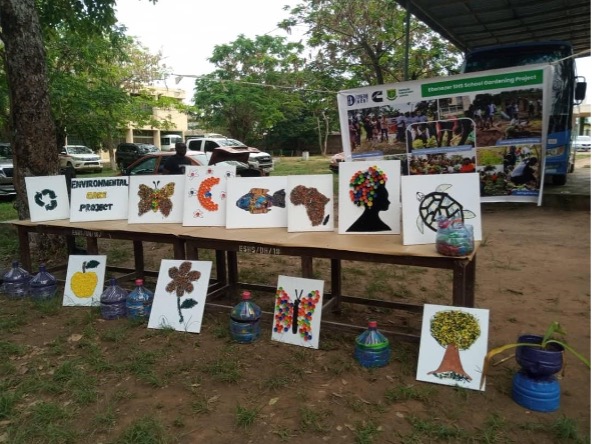
One notable outcome was that some of the artworks were purchased by the Cummins Ghana Managing Director during the event demonstrating the marketability of the skills and creativity of the youth.
The use of reusable bottles plays a significant role in reducing environmental pollution. In line with our ongoing commitment to sustainability, Dream Hunt provided reusable bottles to students, administration and Cummins CIT team as a gesture of appreciation for their dedication to the environmental care project. This initiative not only recognizes their contributions but also reinforced our unwavering commitment to advancing environmental sustainability.
Fig 7 : Reusable branded Dream Hunt Bottles

We also had the opportunity to collaborate with another organization, United Way, which helped expand our advocacy reach and provided additional support for our event. This collaboration created a larger platform for both organizations to push for positive change in the community, further amplifying the voices of the youth and women in the environmental and social change dialogues.
APPRECIATION
Dream Hunt would like to thank Cummins Ghana for funding this project and their CIT team for their amazing coordination in making this project a success. We are much grateful to the
Ebenezer SHS, administration, students and staff members were very instrumental as well in this project.
Related post: Herbal Viagra Alternatives: Natural Solutions for Men’s Vitality
AYEKOO to Dream Hunt Volunteers!!!
